---
title: "2026 Payment Gateway Build Cost: Cybersecurity Requirements | 1 Cyber Valley"
description: Calculate your 2026 payment gateway build cost. Budget for critical cybersecurity requirements, PCI compliance, and secure transactional architecture.
image: https://www.onecybervalley.com/hubfs/vagaro-Iingrw2ZVYs-unsplash-1.jpg
---
[](https://www.onecybervalley.com/)
[](https://www.onecybervalley.com/)
- [Home](https://www.onecybervalley.com)
- [About Us](https://www.onecybervalley.com/about-us)
- [Career](https://www.onecybervalley.com/careers)
- [Blog](https://www.onecybervalley.com/blog)
- [FAQ](https://www.onecybervalley.com/faq)
- [How we help](https://www.onecybervalley.com/how-we-help)
- [PCI DSS](https://www.onecybervalley.com/how-we-help/pci-dss)
- [QSA Assessment Services](https://www.onecybervalley.com/how-we-help/pci-dss/assessment-services)
- [PCI DSS Managed Service](https://www.onecybervalley.com/how-we-help/pci-dss/pci-dss-managed-service)
- [PCI PIN](https://www.onecybervalley.com/how-we-help/pci-pin/pci-pin-advisory-services)
- [PCI PIN Advisory Services](https://www.onecybervalley.com/how-we-help/pci-pin/pci-pin-advisory-services)
- [Managed Security Services](https://www.onecybervalley.com/how-we-help/managed-security-services)
- [Vulnerability Magagement](https://www.onecybervalley.com/how-we-help/management-services/vulnerability-management)
- [Managed Detection & Response](https://www.onecybervalley.com/how-we-help/management-services/managed-detection-response)
- [Penetration Testing](https://www.onecybervalley.com/management-services/penetration-testing)
- [Security Awareness & Training](https://www.onecybervalley.com/management-services/security-awareness-training)
- [Managed Phishing Services](https://www.onecybervalley.com/management-services/managed-phishing-service)
- [Third Party Assurance](https://www.onecybervalley.com/how-we-help/management-services/third-party-assurance)
- [Consultancy](https://www.onecybervalley.com/how-we-help/consultancy)
- [Cyber Security Consultancy](https://www.onecybervalley.com/how-we-help/cyber-security-consultancy)
- [Virtual CISO](https://www.onecybervalley.com/how-we-help/virtual-ciso)
- [Security Strategy & Transformation](https://www.onecybervalley.com/how-we-help/security-strategy-transformation)
- [Contact Us](https://www.onecybervalley.com/contact-us)
- [Home](https://www.onecybervalley.com)
- [About Us](https://www.onecybervalley.com/about-us)
- [Career](https://www.onecybervalley.com/careers)
- [Blog](https://www.onecybervalley.com/blog)
- [FAQ](https://www.onecybervalley.com/faq)
- [How we help](https://www.onecybervalley.com/how-we-help)
- [PCI DSS](https://www.onecybervalley.com/how-we-help/pci-dss)
- [QSA Assessment Services](https://www.onecybervalley.com/how-we-help/pci-dss/assessment-services)
- [PCI DSS Managed Service](https://www.onecybervalley.com/how-we-help/pci-dss/pci-dss-managed-service)
- [PCI PIN](https://www.onecybervalley.com/how-we-help/pci-pin/pci-pin-advisory-services)
- [PCI PIN Advisory Services](https://www.onecybervalley.com/how-we-help/pci-pin/pci-pin-advisory-services)
- [Managed Security Services](https://www.onecybervalley.com/how-we-help/managed-security-services)
- [Vulnerability Magagement](https://www.onecybervalley.com/how-we-help/management-services/vulnerability-management)
- [Managed Detection & Response](https://www.onecybervalley.com/how-we-help/management-services/managed-detection-response)
- [Penetration Testing](https://www.onecybervalley.com/management-services/penetration-testing)
- [Security Awareness & Training](https://www.onecybervalley.com/management-services/security-awareness-training)
- [Managed Phishing Services](https://www.onecybervalley.com/management-services/managed-phishing-service)
- [Third Party Assurance](https://www.onecybervalley.com/how-we-help/management-services/third-party-assurance)
- [Consultancy](https://www.onecybervalley.com/how-we-help/consultancy)
- [Cyber Security Consultancy](https://www.onecybervalley.com/how-we-help/cyber-security-consultancy)
- [Virtual CISO](https://www.onecybervalley.com/how-we-help/virtual-ciso)
- [Security Strategy & Transformation](https://www.onecybervalley.com/how-we-help/security-strategy-transformation)
- [Contact Us](https://www.onecybervalley.com/contact-us)
- [Talk to an Expert](https://calendly.com/hello-onecybervalley)
- [Talk to an Expert](https://calendly.com/hello-onecybervalley)
.png)
   
# 2026 Payment Gateway Build Cost: Cybersecurity Requirements
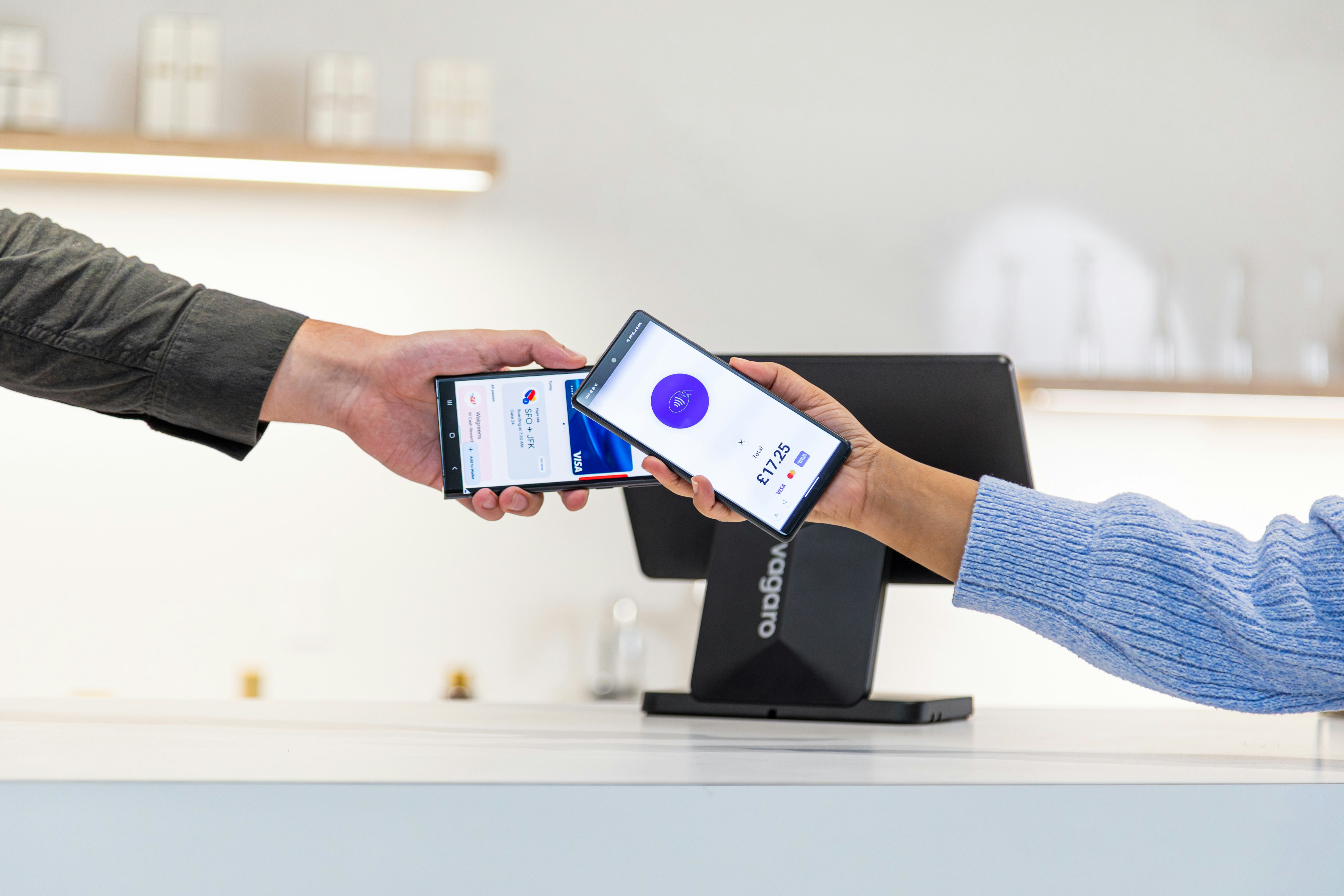
In 2026, the decision to build a proprietary payment gateway is increasingly driven by an enterprise's desire for operational autonomy, lower transactional fees, and highly customized customer experiences. However, underestimating the sheer complexity and cost of securing such an infrastructure is a critical mistake for modern organizations. A payment gateway is not merely a transactional pipeline; it is a high-value target for sophisticated threat actors, requiring robust defense-in-depth strategies to protect sensitive cardholder data (CHD) and personally identifiable information (PII).
Consequently, when organizations calculate the financial investment required to design, deploy, and maintain a custom payment gateway, cybersecurity and regulatory compliance emerge as the primary cost drivers. From implementing stringent PCI-DSS v4.0 controls to deploying advanced zero-trust API architectures, the modern security posture of a payment processor demands significant capital allocation. Organizations must shift their perspective from viewing security as an auxiliary feature to recognizing it as the foundational architecture upon which the entire gateway is constructed.
The Reality of Gateway Costs: A Security-First Breakdown
While basic software development for a payment gateway can range from $150,000 to $500,000, integrating enterprise-grade security, achieving compliance, and establishing continuous monitoring easily double or triple that investment. In the current threat landscape, a secure, market-ready gateway routinely demands an investment exceeding $1,000,000.
#### The PCI-DSS v4.0 Compliance Premium
Compliance is no longer a static, annual check-the-box exercise. With PCI-DSS v4.0 fully in effect, organizations face stringent requirements designed to address evolving threat profiles. This standard mandates continuous security assessments, automated log monitoring, and multi-factor authentication (MFA) for all access to the Cardholder Data Environment (CDE).
To achieve Level 1 Merchant or Service Provider compliance, organizations must engage a Qualified Security Assessor (QSA). The initial audit, combined with the necessary remediation work, vulnerability scanning, and penetration testing, can cost anywhere from $80,000 to over $200,000 annually. This does not account for the internal engineering hours required to document policies, configure systems, and maintain audit readiness.
#### Cryptographic Infrastructure and Tokenization
Protecting data at rest and in transit requires a sophisticated cryptographic infrastructure. Industry best practices demand the implementation of Hardware Security Modules (HSMs) to manage, generate, and store cryptographic keys securely. Whether utilizing physical on-premises HSMs or cloud-based equivalents (such as AWS CloudHSM or Azure Dedicated HSM), the operational costs are substantial.
Furthermore, to minimize the scope of the CDE - and thereby reduce compliance costs - enterprises must implement vaultless or vaulted tokenization engines. Tokenization replaces sensitive card data with mathematically irreversible tokens. Designing and maintaining this isolation layer requires specialized security engineering talent, adding significant development overhead.
Engineering a Zero-Trust API Ecosystem
Modern payment gateways are fundamentally a collection of interconnected APIs. Securing these endpoints is critical, as APIs represent the primary attack surface for malicious actors targeting financial transactions.
#### API Security and WAAP Solutions
According to the OWASP API Security Top 10, vulnerabilities such as Broken Object Level Authorization (BOLA) and Unrestricted Resource Consumption are highly targeted in fintech environments. To defend against these vectors, organizations must deploy Web Application and API Protection (WAAP) platforms. These solutions combine web application firewalls (WAF), API discovery, DDoS mitigation, and bot management.
To prevent unauthorized access, all B2B API integrations must utilize Mutual TLS (mTLS). This ensures that both the client and the server cryptographically verify each other’s identity before establishing a connection. Implementing and managing a private Public Key Infrastructure (PKI) to handle these certificates adds another layer of operational complexity and cost.
#### Identity and Access Management (IAM)
Applying the Principle of Least Privilege (PoLP) is foundational to zero-trust architectures. Payment gateways require granular Role-Based Access Control (RBAC) and Attribute-Based Access Control (ABAC) to restrict access to sensitive transactional databases. Every administrative action must be authenticated, authorized, and logged. Implementing continuous authentication mechanisms to detect anomalous session behavior or credential hijacking is essential to mitigate insider threats and external compromises.
Mitigating Emerging Threats and Fraud
As threat actors leverage artificial intelligence to automate and scale their attacks, traditional, rule-based fraud detection systems are no longer sufficient.
#### AI-Driven Fraud and Transaction Monitoring
In 2026, real-time machine learning (ML) models are required to analyze transaction patterns, device fingerprinting, and behavioral biometrics. These models detect anomalous behavior—such as velocity attacks or card-testing schemes—in milliseconds, blocking fraudulent transactions before authorization. Licensing, training, and maintaining these AI models require substantial ongoing investment, yet they are vital to preserving the gateway's financial and reputational integrity.
#### Aligning with Cybersecurity Frameworks
To build a resilient gateway, security teams must align their architecture with established frameworks, such as the NIST Cybersecurity Framework (CSF 2.0) and the CIS Critical Security Controls. This alignment helps organizations map their defenses against specific tactics in the MITRE ATT&CK framework, particularly those targeting financial services, such as:
- **T1190 (Exploit Public-Facing Application):** Defended against by rigorous input validation, WAF/WAAP deployment, and regular patching.
- **T1557 (Adversary-in-the-Middle):** Mitigated through mandatory mTLS and strong encryption protocols (TLS 1.3).
- **T1020 (Automated Exfiltration):** Addressed via data loss prevention (DLP) tools and strict egress filtering on database environments.
What This Means for Your Organization
For CISOs, IT leaders, and security engineers, the decision to build a payment gateway must be approached with extreme analytical rigor. To navigate the financial and technical challenges of this undertaking, organizations should adopt the following actionable recommendations:
- **Conduct a rigorous Buy vs. Build risk assessment:** Evaluate whether the long-term operational security liabilities, compliance overhead, and specialized staffing costs of a custom gateway outweigh the transaction fees of established third-party processors.
- **Adopt a DevSecOps model from day one:** Integrate Static Application Security Testing (SAST), Dynamic Application Security Testing (DAST), and Software Composition Analysis (SCA) directly into your CI/CD pipeline to identify and remediate vulnerabilities before they reach production.
- **Prioritize scope reduction through tokenization:** Ensure that primary account numbers (PANs) are tokenized at the earliest possible entry point, significantly shrinking the physical and logical boundaries of your Cardholder Data Environment (CDE).
- **Establish an active threat-hunting and penetration testing cadence:** Do not rely solely on annual compliance audits. Implement continuous vulnerability management, active threat hunting, and quarterly third-party penetration testing to identify zero-day vulnerabilities and misconfigurations.
Whether you're looking to assess your current security posture or build a comprehensive defense strategy, 1 Cyber Valley can help. Contact us at [hello@onecybervalley.com](mailto:hello@onecybervalley.com)
### Key Takeaways
- **Security and compliance are the dominant cost drivers:** Building a payment gateway demands a security-first budget where cryptography, API protection, and compliance audits outpace standard development costs.
- **PCI-DSS v4.0 requires continuous validation:** Compliance is no longer a point-in-time check; the standard mandates continuous monitoring, automated vulnerability scanning, and strict multi-factor authentication across the entire environment.
- **Zero-trust API architecture is non-negotiable:** Gateways must secure all internal and external communication channels using mTLS, robust IAM, and advanced WAAP solutions to defend against OWASP Top 10 API vulnerabilities.
- **Scope reduction is the ultimate cost saver:** Minimizing the CDE through secure tokenization is the most effective way to lower both initial development expenses and long-term compliance overhead.
### How 1 Cyber Valley Can Help
1 Cyber Valley specializes in guiding enterprises through the complex security landscape of financial technology and payment gateway development. Our team of expert security architects and engineers assists organizations with threat modeling, API security design, and achieving PCI-DSS v4.0 compliance readiness. Reach out to us at [hello@onecybervalley.com](mailto:hello@onecybervalley.com) to start the conversation.
### Latest Posts
[](https://www.onecybervalley.com/blog/top-cybersecurity-open-source-tools-to-combat-cyber-threats-june-2026)
[Top Cybersecurity Open-Source Tools to Combat Cyber Threats - 2026](https://www.onecybervalley.com/blog/top-cybersecurity-open-source-tools-to-combat-cyber-threats-june-2026)
September 22,2026
[](https://www.onecybervalley.com/blog/ai-driven-cyber-threats-rising-risks-for-healthcare-information-security)
[AI-Driven Cyber Threats: Rising Risks for Healthcare Information Security](https://www.onecybervalley.com/blog/ai-driven-cyber-threats-rising-risks-for-healthcare-information-security)
September 15,2026
[](https://www.onecybervalley.com/blog/decades-old-bash-tricks-fuel-ai-supply-chain-cybersecurity-risks)
[Decades-Old Bash Tricks Fuel AI Supply Chain Cybersecurity Risks](https://www.onecybervalley.com/blog/decades-old-bash-tricks-fuel-ai-supply-chain-cybersecurity-risks)
September 08,2026
[](https://www.onecybervalley.com/blog/ai-driven-social-engineering-scams-a-growing-cybersecurity-threat)
[AI-Driven Social Engineering Scams: A Growing Cybersecurity Threat](https://www.onecybervalley.com/blog/ai-driven-social-engineering-scams-a-growing-cybersecurity-threat)
September 02,2026
[](https://www.onecybervalley.com/blog/2026-payment-gateway-build-cost-cybersecurity-requirements)
[2026 Payment Gateway Build Cost: Cybersecurity Requirements](https://www.onecybervalley.com/blog/2026-payment-gateway-build-cost-cybersecurity-requirements)
August 31,2026
## Related Articles
[](https://www.onecybervalley.com/blog/dast-vs-pen-testing-key-cybersecurity-differences-to-prevent-breaches)
#### [DAST vs Pen Testing: Key Cybersecurity Differences to Prevent Breaches](https://www.onecybervalley.com/blog/dast-vs-pen-testing-key-cybersecurity-differences-to-prevent-breaches)
In the ever-evolving world of cybersecurity, the tools and methodologies organizations use to...
[Read More](https://www.onecybervalley.com/blog/dast-vs-pen-testing-key-cybersecurity-differences-to-prevent-breaches)
[](https://www.onecybervalley.com/blog/ai-driven-social-engineering-scams-a-growing-cybersecurity-threat)
#### [AI-Driven Social Engineering Scams: A Growing Cybersecurity Threat](https://www.onecybervalley.com/blog/ai-driven-social-engineering-scams-a-growing-cybersecurity-threat)
The increasing sophistication of artificial intelligence (AI) has revolutionized industries,...
[Read More](https://www.onecybervalley.com/blog/ai-driven-social-engineering-scams-a-growing-cybersecurity-threat)
[](https://www.onecybervalley.com/blog/decades-old-bash-tricks-fuel-ai-supply-chain-cybersecurity-risks)
#### [Decades-Old Bash Tricks Fuel AI Supply Chain Cybersecurity Risks](https://www.onecybervalley.com/blog/decades-old-bash-tricks-fuel-ai-supply-chain-cybersecurity-risks)
The rise of AI coding agents has revolutionized software development, automating tedious coding...
[Read More](https://www.onecybervalley.com/blog/decades-old-bash-tricks-fuel-ai-supply-chain-cybersecurity-risks)
[](https://www.onecybervalley.com/)
Cybersecurity today, tomorrow, together…
- Useful Links
- [PCI DSS QSA Compliance Services](https://www.onecybervalley.com/how-we-help/pci-dss)
- [Cyber Security Consultancy Services](https://www.onecybervalley.com/how-we-help/consultancy)
- [Managed Security Services](https://www.onecybervalley.com/how-we-help/managed-security-services)
- Community
- [About Us](https://www.onecybervalley.com/about-us)
- [Blog](https://www.onecybervalley.com/blog)
- More Info
- [Contact Us](https://www.onecybervalley.com/contact-us)
- [Career](https://www.onecybervalley.com/careers)
All Rights Reserved © 1 Cyber Valley. 2026
- [Privacy](https://www.onecybervalley.com/privacy-policy)
- [Terms & Conditions](https://www.onecybervalley.com/terms-and-conditions)
```json
{
"@context" : "https://schema.org",
"@id" : "https://www.onecybervalley.com/",
"@type" : "Organization",
"description" : "PCI DSS Qualified Security Assessor and cybersecurity consulting firm operating in 120+ countries, serving 150+ enterprise clients.",
"logo" : {
"@type" : "ImageObject",
"url" : "https://www.onecybervalley.com/hs-fs/hubfs/CyberValley_2023/Images/Logo.png"
},
"name" : "One Cyber Valley",
"sameAs" : [ "https://uk.linkedin.com/company/1-cyber-valley" ],
"url" : "https://www.onecybervalley.com/"
}
```
```json
{
"@context" : "https://schema.org",
"@type" : "BlogPosting",
"author" : {
"@type" : "Person",
"name" : "Admin",
"url" : "https://www.onecybervalley.com/blog/author/admin"
},
"dateModified" : "2026-08-31T10:16:37.465Z",
"datePublished" : "2026-08-31T10:16:22.000Z",
"headline" : "2026 Payment Gateway Build Cost: Cybersecurity Requirements | 1 Cyber Valley",
"image" : [ "https://www.onecybervalley.com/hubfs/vagaro-Iingrw2ZVYs-unsplash-1.jpg" ],
"mainEntityOfPage" : {
"@id" : "https://www.onecybervalley.com/blog/2026-payment-gateway-build-cost-cybersecurity-requirements",
"@type" : "WebPage"
},
"publisher" : {
"@type" : "Organization",
"logo" : {
"@type" : "ImageObject",
"url" : "https://www.onecybervalley.com/hubfs/Picture%201-1.png"
},
"name" : "1 Cyber Valley"
}
}
```
```json
{
"@context" : "https://schema.org",
"@type" : "Article",
"author" : {
"@type" : "Person",
"name" : "Admin"
},
"dateModified" : "2026-08-31T10:16:37+0000",
"datePublished" : "2026-08-31T10:16:22+0000",
"description" : "Calculate your 2026 payment gateway build cost. Budget for critical cybersecurity requirements, PCI compliance, and secure transactional architecture.",
"headline" : "2026 Payment Gateway Build Cost: Cybersecurity Requirements",
"image" : [ "https://9302146.fs1.hubspotusercontent-na1.net/hubfs/9302146/vagaro-Iingrw2ZVYs-unsplash-1.jpg" ],
"mainEntityOfPage" : {
"@id" : "https://www.onecybervalley.com/blog/2026-payment-gateway-build-cost-cybersecurity-requirements",
"@type" : "WebPage"
},
"publisher" : {
"@type" : "Organization",
"logo" : {
"@type" : "ImageObject",
"url" : "https://www.onecybervalley.com/hs-fs/hubfs/CyberValley_2023/Images/Logo.png"
},
"name" : "One Cyber Valley"
}
}
```
```json
{
"@context" : "https://schema.org",
"@type" : "BreadcrumbList",
"itemListElement" : [ {
"@type" : "ListItem",
"item" : "https://www.onecybervalley.com",
"name" : "Home",
"position" : 1
}, {
"@type" : "ListItem",
"item" : "https://www.onecybervalley.com/blog",
"name" : "Blog",
"position" : 2
}, {
"@type" : "ListItem",
"item" : "https://www.onecybervalley.com/blog/2026-payment-gateway-build-cost-cybersecurity-requirements",
"name" : "2026 Payment Gateway Build Cost: Cybersecurity Requirements",
"position" : 3
} ]
}
```